The Coaching in Science Initiative
Healthy Communication
“You have the right to make requests,
but always leave room for refusal”
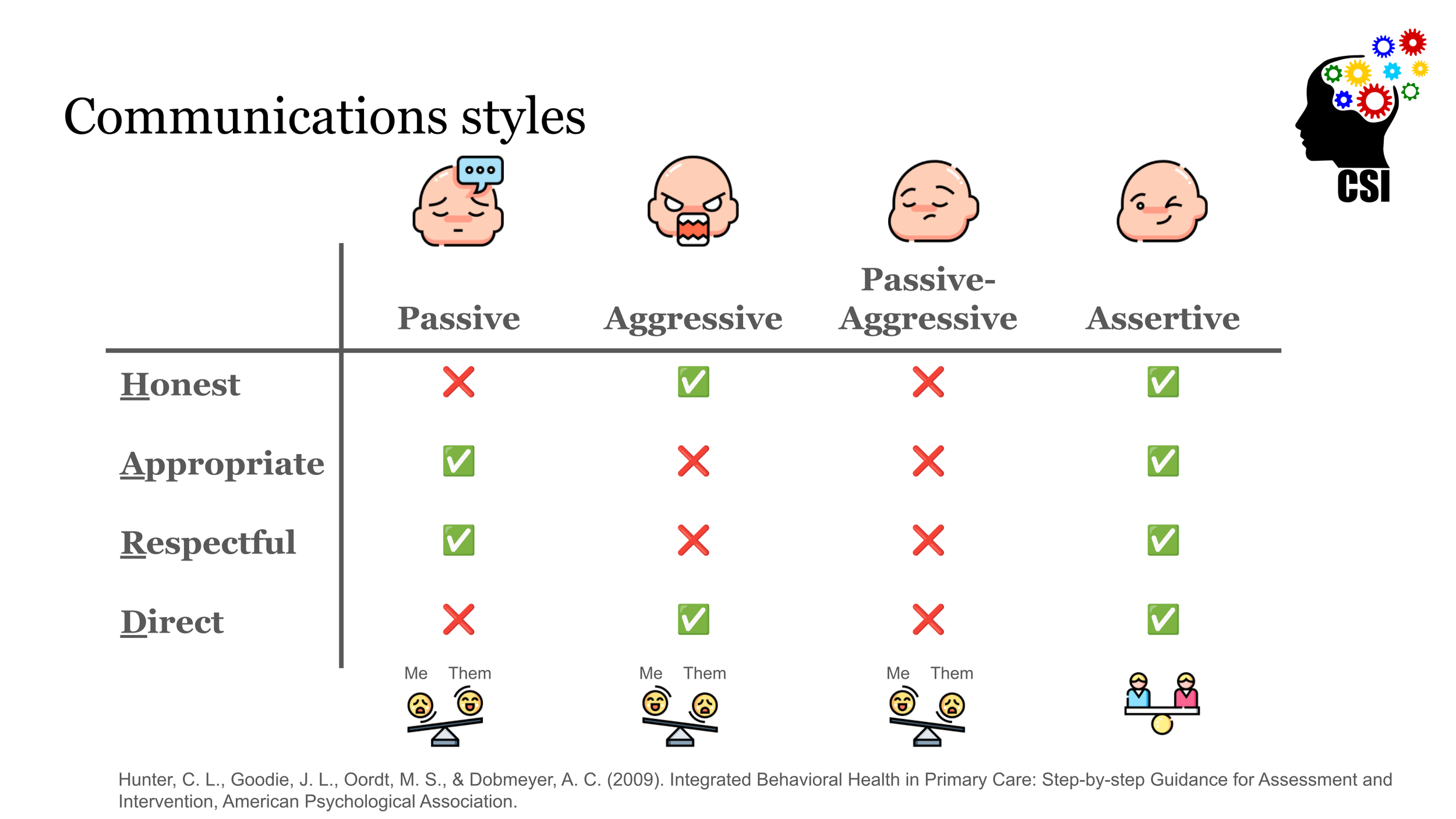
Communication styles

Passive
When we communicate passively, we put ourselves below others. We disregard our own needs and feelings or even hide them. We don’t stand up for ourselves, and hence are easily disregarded or pushed around. We are apologetic. Even in a supportive environment, there is no way for others to know about our real needs or feelings. This makes this communication style respectful and appropriate, but indirect or even dishonest. Passivity creates frustration in us over time, since we always give up our needs voluntarily.

Aggressive
When we communicate aggressively, we put ourselves above others. We are insensitive to the needs and feelings of others. We use anger, insults, or even humiliation as a tool to dominate over others and achieve the fulfillment of our needs. We unapologetically and clearly communicate our needs and feelings. This makes this communication style disrespectful and inappropriate, but direct and honest. Aggression creates conflicts and resentment in others over time, since their needs and feelings are never met.

Passive-Aggressive
When we communicate passive-aggressively, we put ourselves above others, but indirectly. We resist in a passive way. We sabotage or ignore others' needs, refuse to cooperate, but we don’t say it out loud directly. We don’t communicate our needs and feelings by openly saying them, but through passive resistance. Passive-aggression often creates the feeling in others that something is wrong, but always in an indirect way. This makes this communication style disrespectful and inappropriate, but also indirect and dishonest. Passive-aggression creates frustration in others over time, since their expectations are never met, and there is never room for discussion or negotiation due to this indirectness.

Assertive
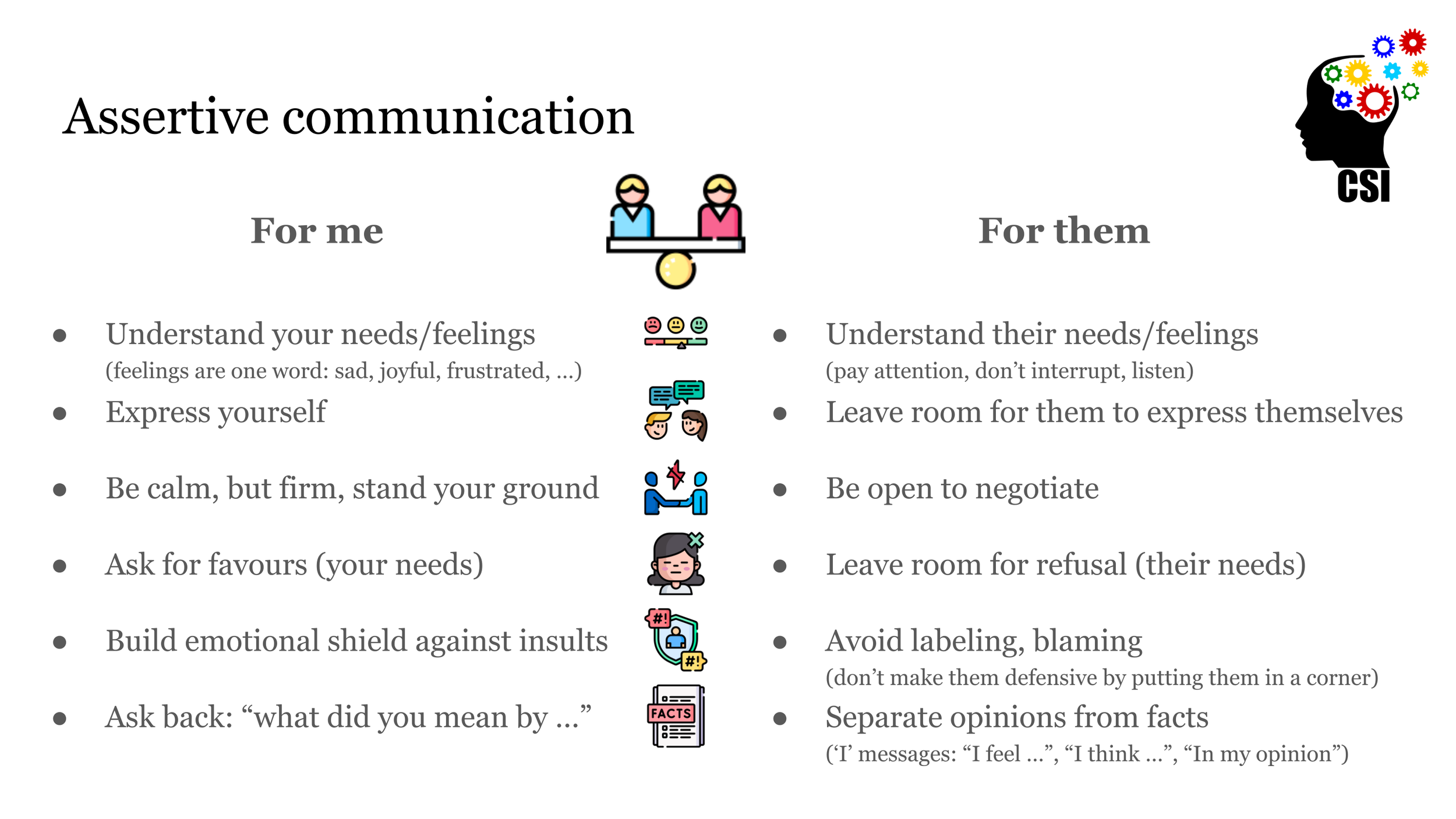
Assertive communication is about a balance between our own needs and feelings, and the needs and feelings of others. We firmly represent our own interests, but leave room for negotiation. We express ourselves but make an effort to understand others as well. We try to de-escalate conflicts and reach a compromise. We don’t take insults personally, and don’t insult others. We separate opinions from facts. We stay calm, but firm in our position. This makes this communication style respectful and appropriate, and also direct and honest. Practicing an assertive communication style both reduces conflicts with others since they might feel more understood by us, and our own frustration, since our needs are met more often.
Assertive communication
Example
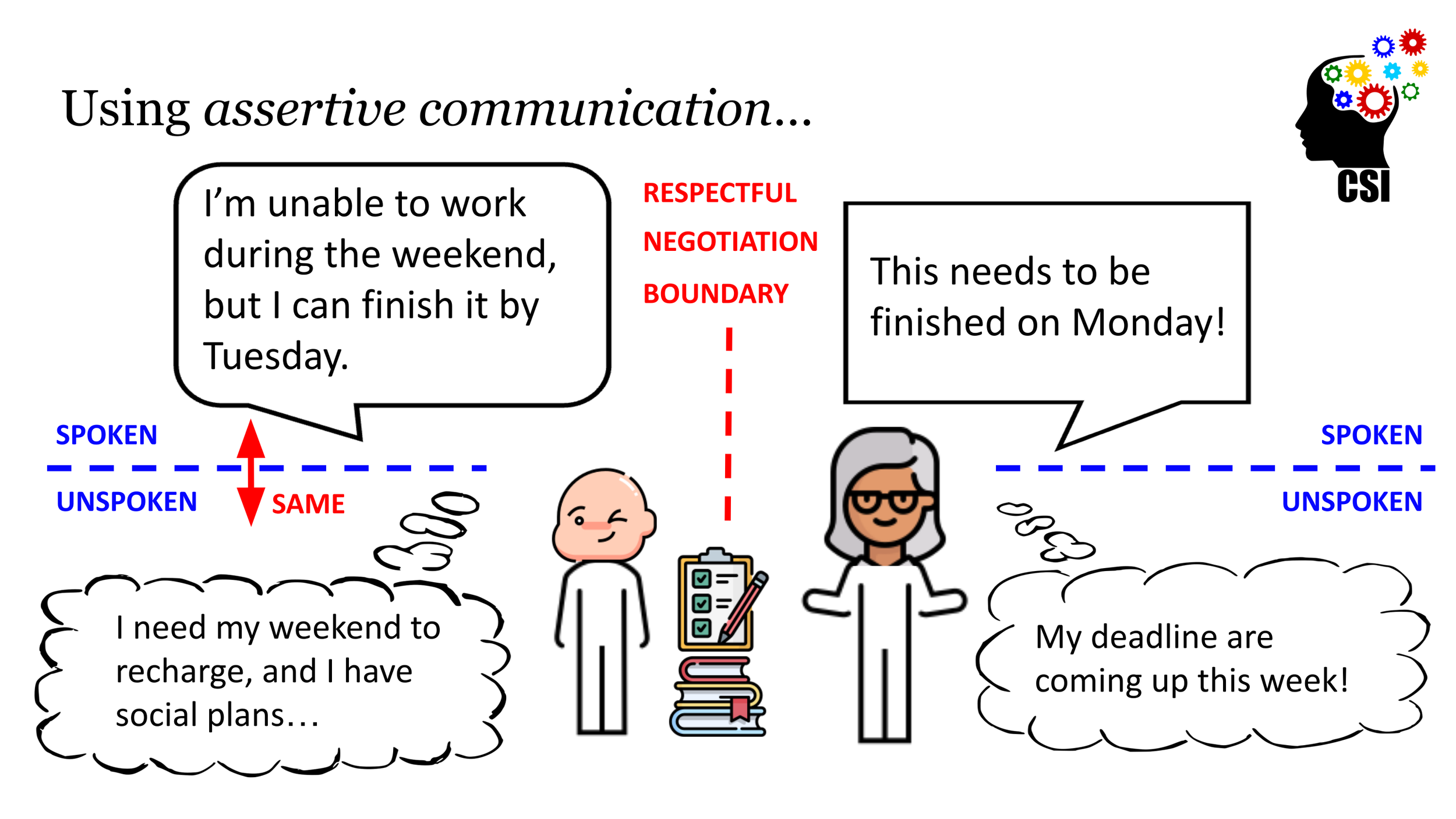
In academia, we might often be/feel pressured into working over the weekend. This raises the need to set boundaries. In such a situation, it is important to be aware of these boundaries and communicate them directly, but respectfully. Try to understand the unspoken need of your supervisor behind their requests. They might have a pressing deadline or other unspoken stressful issues. Don’t take it personally. Be aware of your boundary and communicate it clearly, firmly, but respectfully. Be honest and say what you mean. You have the right to set such a boundary, but you have to stay respectful. Don’t put your supervisor in a corner, they may react defensively. Be open to negotiation, and add something that indicates that you take their needs seriously as well.
How to build emotional shields?
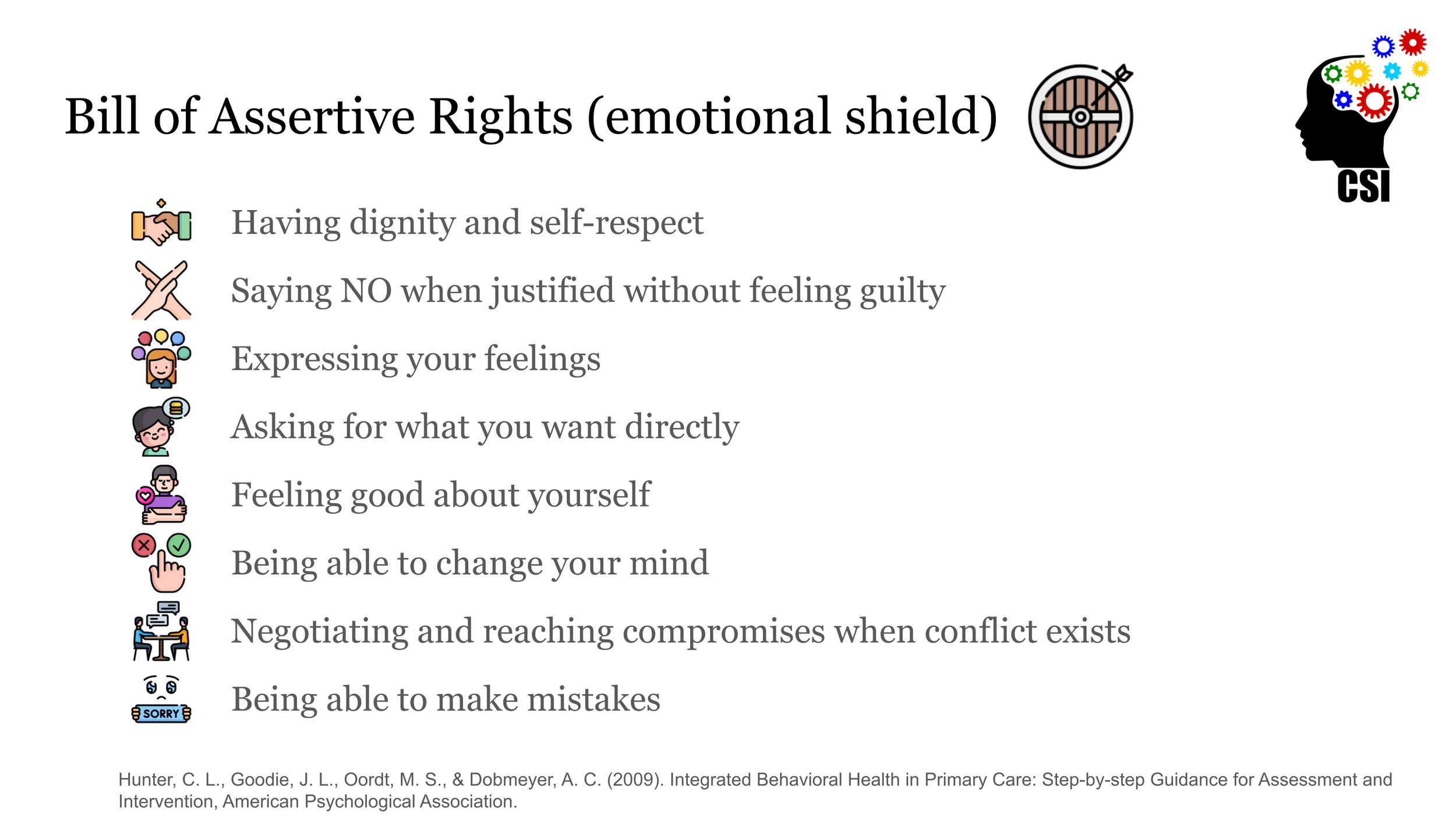
In conflicts, it is almost inevitable that someone at some point might say hurtful things to us or pressure us to go against our own needs. It is important to be able to respond to these appropriately. We need to stay calm, but firm. We should avoid escalating to a fight, avoid taking it personally, and avoid reacting with insults or labels. This might be difficult in the heat of the moment. The first step to handling a situation like this is to build an emotional shield that we can activate when necessary. Remembering certain “rights” might help us to defend ourselves and our needs.
How to prepare for a difficult conversation?
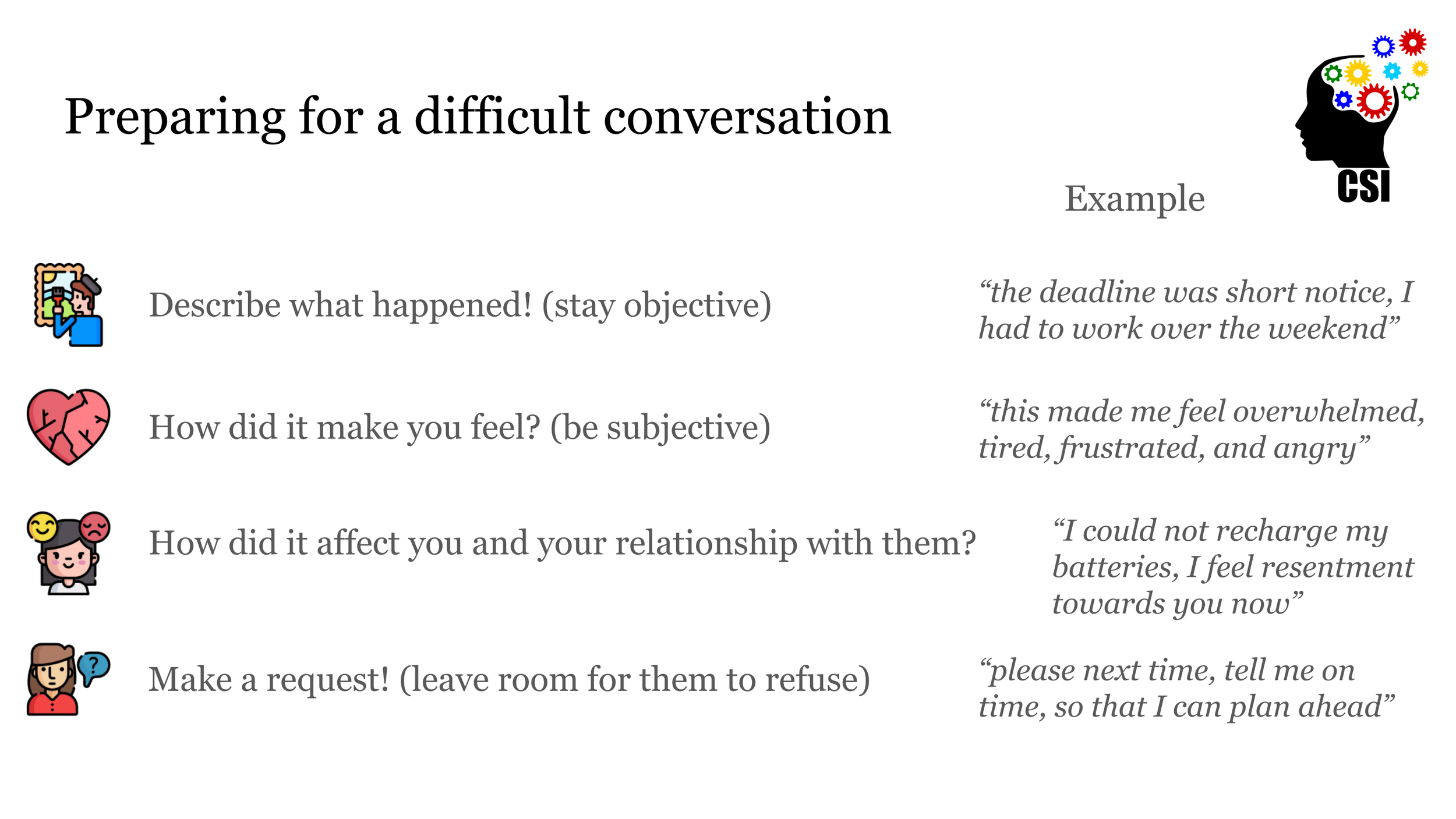
Sometimes we have time to prepare for difficult conversations, when we need to navigate a potentially heated conversation. We can prepare a monologue to start such a conversation. Following these four steps might help to do exactly that using assertive principles. We need to separate facts from feelings, but we need to communicate both. We can finish by formulating a request, but we should always leave room for refusal.