The Coaching in Science Initiative
Boundary Setting
“Understanding and setting boundaries
are the life-essential skills that protects our mental health and set the stage for us to thrive”
Understanding ourselves and setting clear boundaries are essential skills for a healthy life. When we recognize our limits and communicate them with confidence, we protect our mental well-being from stress, resentment, and burnout. Boundaries are not walls that push others away; they are guidelines that create balance, respect, and emotional safety. By honoring our needs, we create the foundation that allows us not just to cope, but to truly thrive.
For scientists, this is especially important because our culture often rewards overwork, constant productivity, and self-sacrifice. The pressure to publish, secure funding, teach, mentor, and stay competitive can blur the line between dedication and burnout. Without clear boundaries, our work can easily consume evenings, weekends, and our personal well-being. By setting boundaries and protecting our time and energy, we not only safeguard our mental health but also sustain the curiosity, creativity, and critical thinking that meaningful research depends on.
What are boundaries?
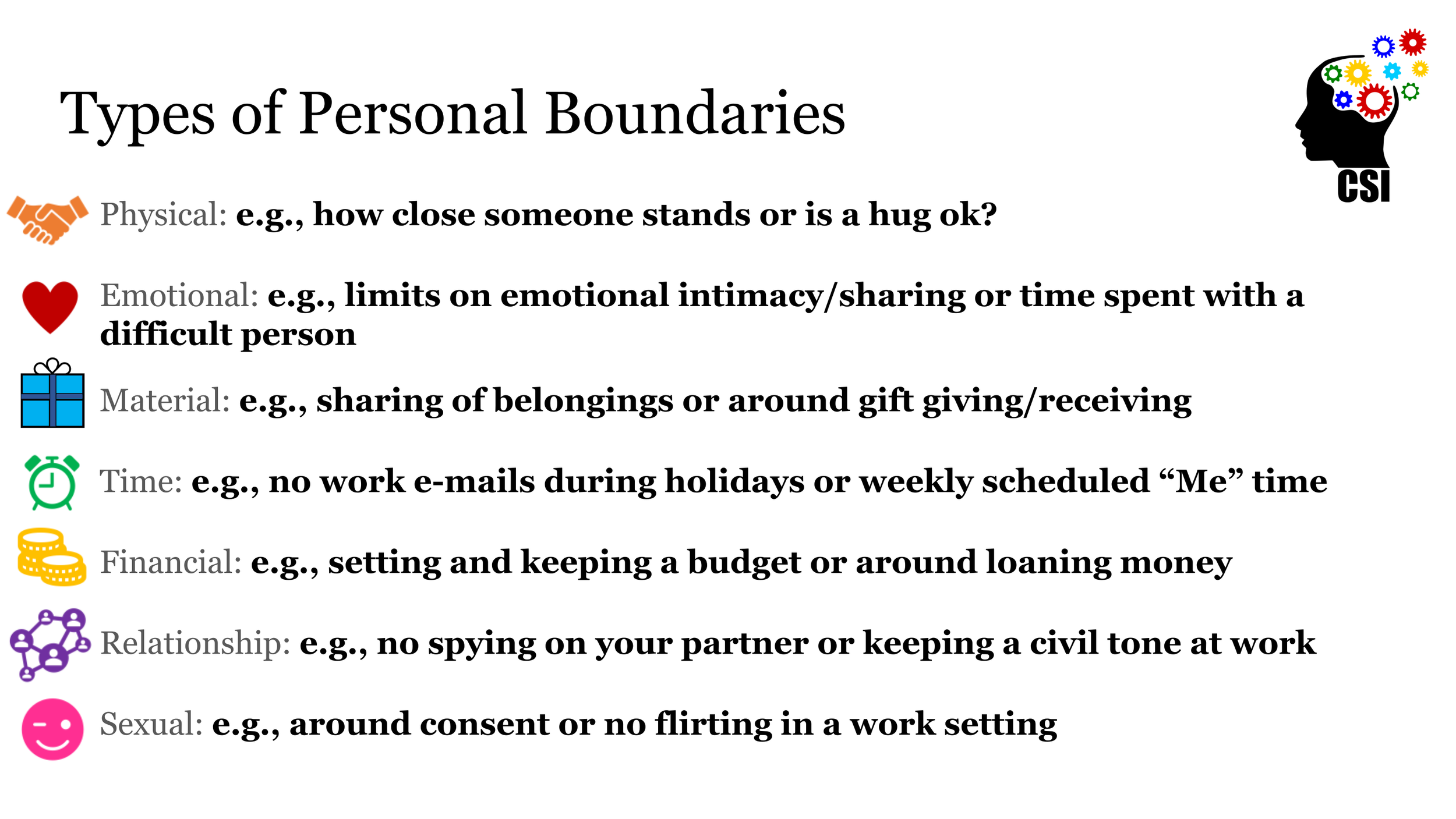
Personal boundaries are the lines we set to protect our time, energy, and well-being as we navigate the demands of family, friends, research, teaching, and collaboration. They might show up in many ways — for example, deciding how much time we spend in meetings, what kinds of emails or messages we respond to outside of work hours, or maintaining our personal workspace and home environment free from unexpected obligations. Boundaries in this context span several areas: emotional boundaries, which protect our mental health and prevent burnout; physical boundaries, which safeguard our personal and work space; professional boundaries, which ensure our work and intellectual contributions are respected; time boundaries, which help us balance research, teaching, and personal life; and material boundaries, which protect our data, equipment, and other resources. Boundaries are essential in every personal and academic setting, and even if we don’t explicitly communicate them, our limits still exist — but they are far more likely to be honored when we clearly express them to family, friends, colleagues, supervisors, and students. Setting and maintaining these boundaries is essential for a healthy work-life balance, sustainable productivity, and the protection of our creativity, motivation, and long-term well-being in a demanding academic environment.
When to set a boundary?
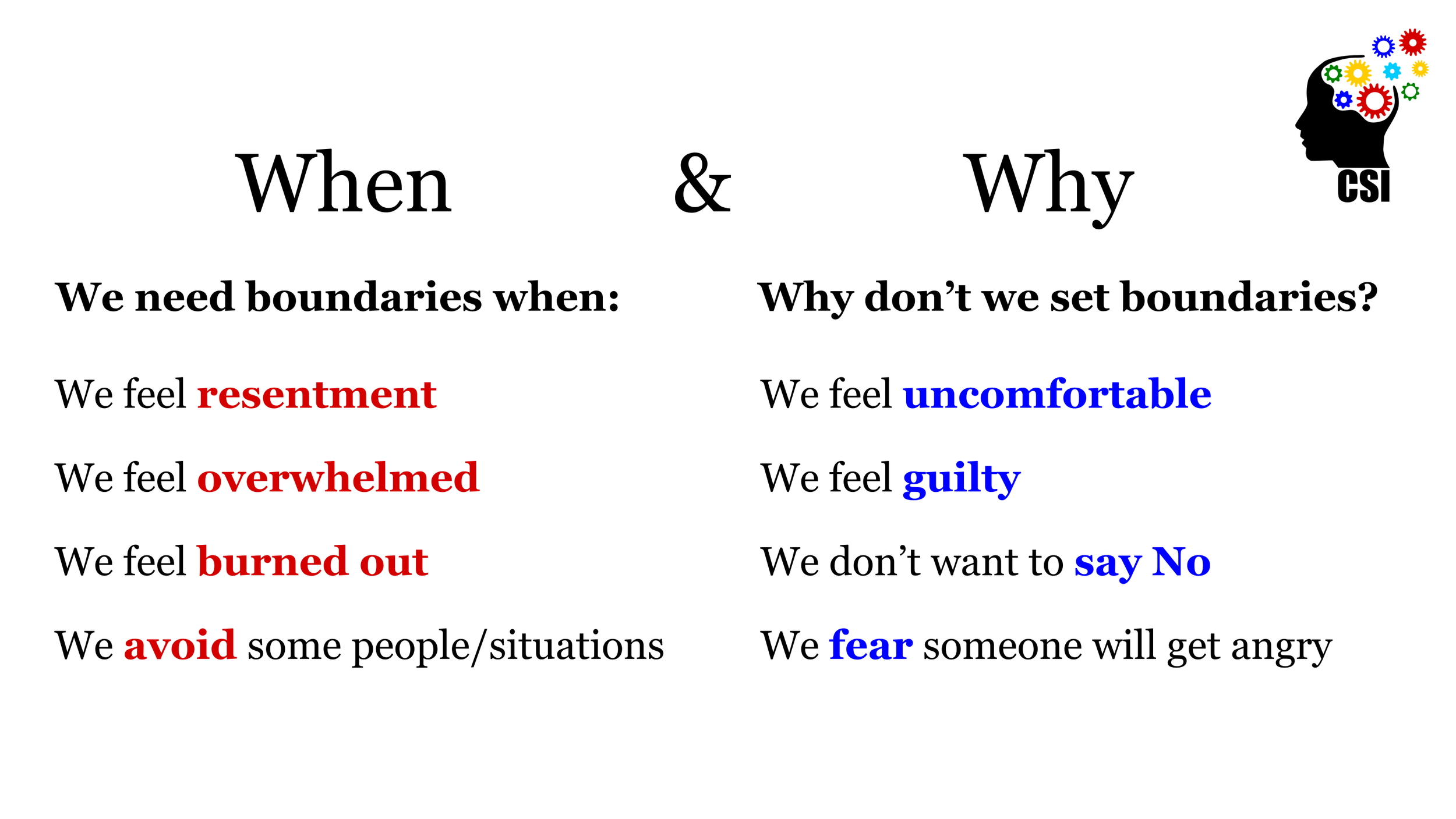
Feeling resentment, overwhelm, burnout, or even avoiding certain people to escape difficult conversations are all common signs that we may need to set boundaries. These feelings are completely normal—most of us have experienced them, many times, and likely will again. Instead of seeing them as personal failures, we can choose to view them as signals to action. When these emotions arise, they invite us to pause and reflect:
Do I need to set a new boundary here?
Setting boundaries can feel uncomfortable at first. We may experience guilt because we’ve internalized the belief that saying “no” is wrong or selfish. We might fear someone will be upset with us, or we may want to avoid uncomfortable conversations. But avoiding boundaries does not eliminate discomfort—it only delays it and often intensifies it. Choosing to set them may feel hard in the moment, but it is an investment in healthier relationships, greater self-respect, and long-term well-being.